ByJohn A
Understanding Deep Learning and Neural Networks
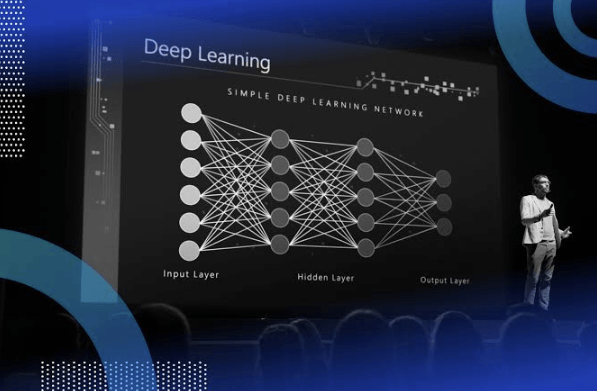
Neural networks are computational models composed of interconnected units that learn representations from data. Deep learning extends this structure with multiple processing layers, enabling hierarchical feature extraction. Data shape the learning process, constraining capacity and guiding architecture design. Across images, text, and audio, these models apply differing representations and objectives, while common challenges—overfitting, interpretability, and compute demands—test their robustness. The interplay of theory, data, and practice invites careful evaluation, leaving open questions about reliable deployment in varied domains.
What Are Neural Networks and Deep Learning
Neural networks are computational models inspired by the brain’s interconnected structure, designed to approximate complex relationships between inputs and outputs. They consist of layers and units forming a scalable model architecture.
In deep learning, hierarchical representations emerge, enabling abstraction from data shapes to robust patterns. This framework emphasizes principled training, generalization, and disciplined evaluation to advance understanding while preserving analytical freedom.
How Data Shapes Learning and Model Architecture
Data shapes learning and model architecture by defining the information the network processes, the signals it can extract, and the complexity it can represent. In this framing, data scaling directly influences model capacity and learning dynamics, while data augmentation broadens experience without increasing parameters. Transfer learning leverages prior representations, enabling efficient adaptation. The interaction clarifies constraints and opportunities for robust, adaptable learning systems.
How Deep Learning Works on Images, Text, and Sound
Images, text, and sound provide distinct modalities through which deep learning models extract patterns: convolutional operations capture spatial hierarchies in images, sequence-aware architectures model temporal and contextual dependencies in text, and spectro-temporal representations enable learning from audio signals.
Image augmentation enhances robustness to visual variation, while audio feature extraction distills meaningful cues from sound, enabling cross-modal synergy and disciplined performance assessment across domains.
Common Challenges: Overfitting, Interpretability, and Compute
Overfitting, interpretability, and compute constitute interrelated challenges that shape the reliability and practicality of deep learning systems.
The discussion emphasizes systematic evaluation: overfitting remedies, such as regularization and validation strategies, reduce spurious generalization while preserving performance.
Interpretability metrics quantify model transparency, aiding scrutiny.
Compute considerations address efficiency, scalability, and reproducibility, ensuring robust deployment without compromising theoretical rigor or freedom to explore.
Frequently Asked Questions
How Do Neural Networks Learn From Mislabeled Data?
Neural networks handle mislabeled data by absorbing learning noise and adjusting parameters probabilistically; robust methods include label corrections, noise-aware loss functions, and validation-based re-labeling, which help mitigate inaccuracies and preserve generalization despite imperfect supervision.
What Role Do Hyperparameters Play in Model Performance?
Hyperparameters steer learning like a compass; they shape model capacity and performance. Hyperparameter tuning calibrates this compass, aligning capacity with data complexity to avoid underfitting or overfitting, while preserving freedom for principled exploration and robust generalization.
See also: flexiturf
Can Deep Learning Models Explain Their Decisions Clearly?
Deep learning models rarely provide fully interpretable explanations; they often generate opaque predictions. Nonetheless, practitioners pursue transparency challenges, developing methods to clarify decision pathways while balancing complexity, accuracy, and user autonomy for audiences desiring freedom.
How Do Generative Models Differ From Discriminative Ones?
Generative and discriminative models differ in objectives: generative models learn joint distributions, enabling data generation, while discriminative models approximate P(y|x) for classification. Model differentiation influences training optimization and evaluation interpretability, guiding appropriate data, tasks, and freedom-minded methodological choices.
What Are Practical Strategies for Deploying Models in Production?
Deploying models in production requires robust versioning, continuous production monitoring, and drift avoidance strategies; practitioners implement automated rollback, feature flagging, and scheduled retraining to maintain performance while preserving freedom to iterate within controlled boundaries.
Conclusion
Neural networks and deep learning are disciplined, data-driven computational systems that learn layered representations to approximate complex mappings. Data quality and quantity shape architectures, learning dynamics, and generalization, while augmentation and transfer learning expand capability without proportionate parameter growth. Across images, text, and sound, models increasingly exhibit robust performance yet face overfitting, interpretability, and compute constraints. An instructive statistic: on average, state-of-the-art image classifiers require orders of magnitude more compute than early models, underscoring the importance of efficiency alongside accuracy.